
Exploring Identity - Guide Booklet
Exploring Identity
A Gentle LGBTIQA+ Guide For Teens
Hardy Copy
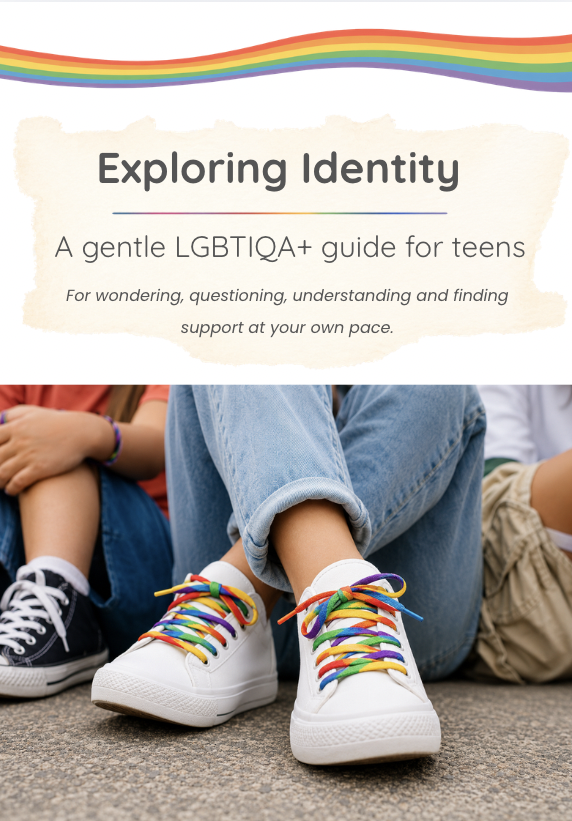
This guide has been created with care for LGBTIQA+ young people who may be
wondering, questioning, exploring, feeling unsure, feeling proud, feeling scared, or
simply wanting language for parts of themselves they are still getting to know.
It is informed by LGBTIQA+ affirming practice, trauma-informed care,
neuroaffirming approaches, child and adolescent mental health knowledge, and the
lived experiences of young people who have helped adults understand what
support, safety and respect can look like.
This guide is for different kinds of minds, bodies and nervous systems. You might
read it from start to finish, skip around, look mostly at the pictures, come back to
one page later, or read small parts with someone you trust.
You might understand yourself through words, body feelings, sensory comfort,
clothes, colours, names, pronouns, patterns, images, or time. There is no one
“normal” way to explore who you are.
This guide has been created with care, by Kirra Clarke, for LGBTIQA+ young people who may be wondering, questioning, exploring, feeling unsure, feeling proud, feeling scared, or simply wanting language for parts of themselves they are still getting to know. It is informed by LGBTIQA+ affirming practice, trauma-informed care, neuroaffirming approaches, child and adolescent mental health knowledge, and the lived experiences of young people who have helped adults understand what support, safety and respect can look like.
This guide is for different kinds of minds, bodies and nervous systems. You mightread it from start to finish, skip around, look mostly at the pictures, come back toone page later, or read small parts with someone you trust. You might understand yourself through words, body feelings, sensory comfort, clothes, colours, names, pronouns, patterns, images, or time. There is no one“normal” way to explore who you are.
PDF Download
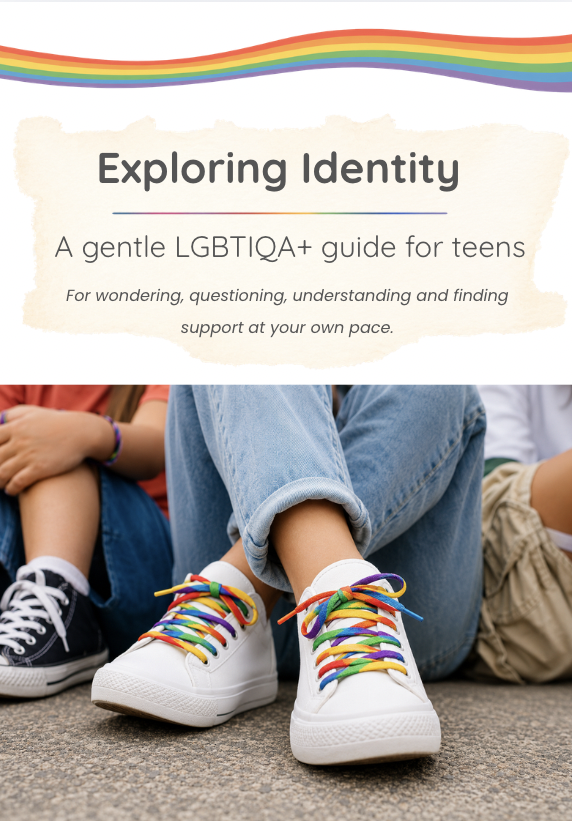
This guide has been created with care for LGBTIQA+ young people who may be wondering, questioning, exploring, feeling unsure, feeling proud, feeling scared, or simply wanting language for parts of themselves they are still getting to know. It is informed by LGBTIQA+ affirming practice, trauma-informed care, neuroaffirming approaches, child and adolescent mental health knowledge, and the lived experiences of young people who have helped adults understand what support, safety and respect can look like. This guide is for different kinds of minds, bodies and nervous systems. You might read it from start to finish, skip around, look mostly at the pictures, come back to one page later, or read small parts with someone you trust. You might understand yourself through words, body feelings, sensory comfort, clothes, colours, names, pronouns, patterns, images, or time. There is no one “normal” way to explore who you are.